
About Raspberry Pi, Virtualization, and More.
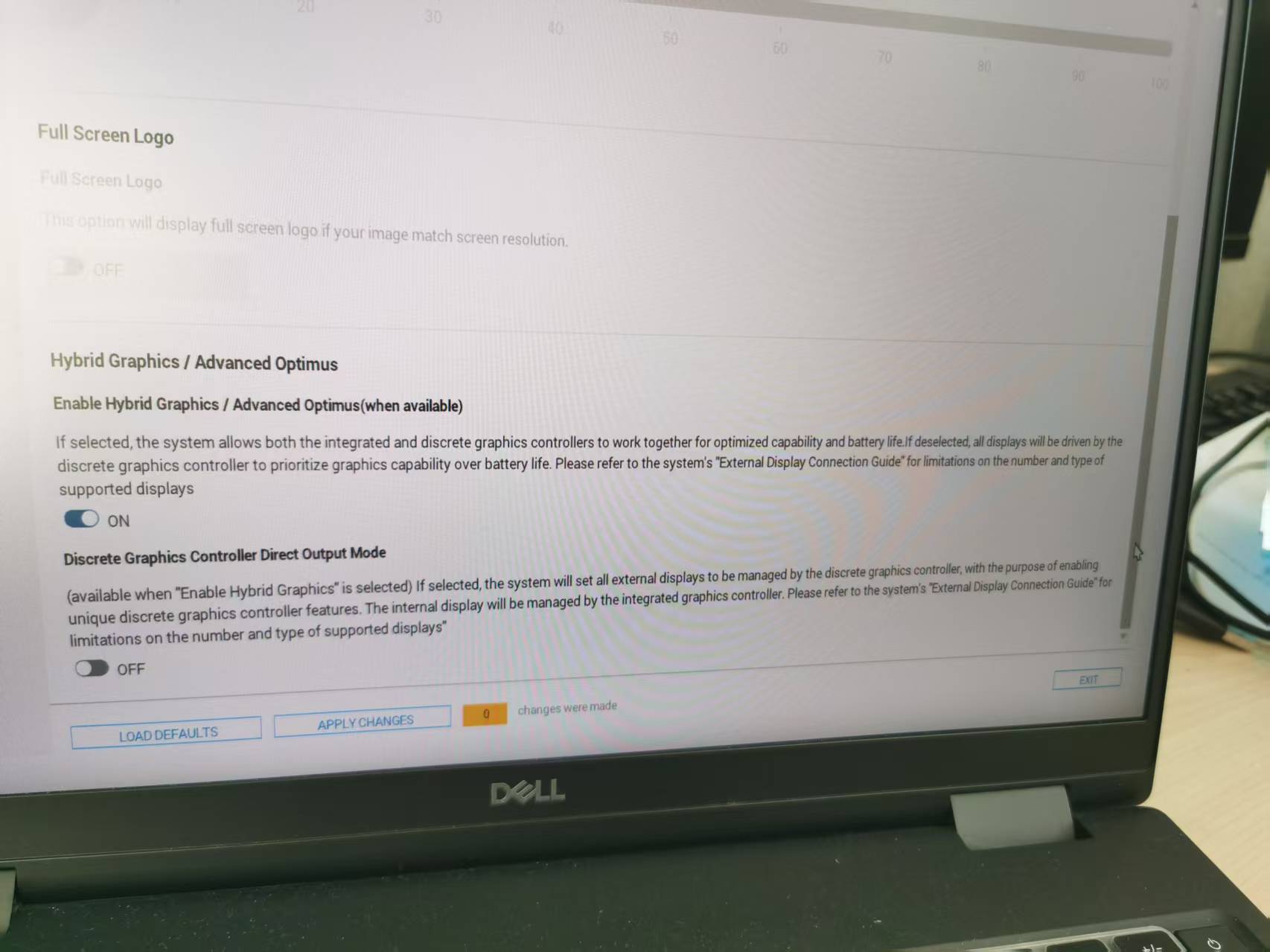
Stuck at 30Hz? Unlocking Dual 4K@60Hz on Your Laptop: The Ultimate MUX Switch & dGPU Guide
Unleashing the Beast: A Guide to True Dual 4K@60Hz Performance on Your Laptop You’ve assembled the perfect mobile workstation: a high-performance laptop, like a Dell Precision, paired with two brilliant 4K monitors. The stage is set for ultimate productivity. But when you connect everything, you’re met with a frustrating reality—choppy mouse movements, stuttering video, and…
Gemini Deep Research Lost? The Surprising Age Verification Fix (No ID Required)
The Day My Gemini Features Vanished One minute, I was a power user of Gemini Advanced, seamlessly switching on Deep Research for complex topics and generating images for my projects. The next? Those features were gone. The “Deep Research” toggle had vanished. My prompts for image generation were met with a generic “I can’t do…
Taming the Fox: A Deep Dive into Fixing a Self-Hosted Firefox Sync Server
Self-hosting is an act of digital sovereignty. In an era of cloud services, running your own software is a powerful way to take control of your data. Firefox Sync is a fantastic, privacy-respecting service, but for those of us who want to go a step further, Mozilla and the open-source community have made it possible…
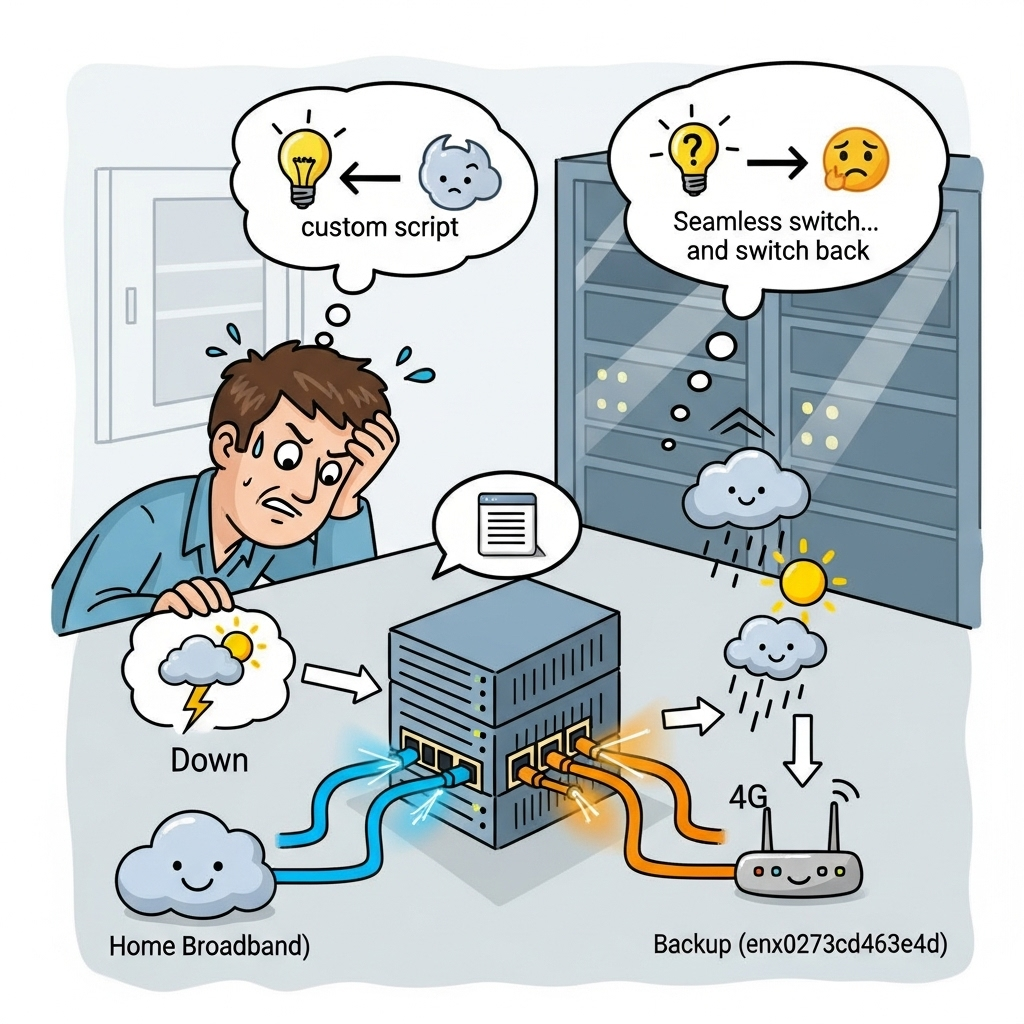
Unmasking Linux Dual-WAN Failover: A Case of the “Accidentally Deleted” Default Route
Setting up dual-WAN (Wide Area Network) failover on a Linux system is a common practice to ensure high availability for services. I recently deployed such a solution on my Ubuntu server: a primary line (enp0s11, connected to my home broadband) and a backup line (enx027c3d463e4d, connected to a 4G router). In theory, my custom script…
Rebuilding GRUB After a Ceph Misadventure on Ubuntu 24.04 arm64 Proxmox VE
Recently, I encountered a rather frustrating issue with my Ubuntu system running inside a Proxmox VE (PVE) virtual machine. The culprit? A seemingly innocent attempt to adjust the placement group (PG) count in my Ceph cluster. What started as a routine optimization turned into a full-blown system crash, leaving my Ubuntu installation unbootable and my…
Resolving VMware Workstation 17 Pro Issues with Windows 2000 by Installing Older VMware Tools Version
Introduction: When installing legacy operating systems like Windows 2000 in VMware Workstation 17 Pro, you may encounter some unexpected issues, especially with graphics and audio. In this blog post, I’ll walk you through my experience of running into problems with the desktop icon color depth and audio distortion when using the default VMware Tools driver.…
Raspberry Pi 5 Proxmox VE Cluster
Install a standard Raspberry Pi OS (Debian Wormbook) Configure /etc/hosts for all 4 boards 192.168.1.101 node001.proxmox.com node001192.168.1.175 node002.proxmox.com node002192.168.1.213 node003.proxmox.com node003192.168.1.182 node004.proxmox.com node004 Disable IPv6 (Optional) Change system source list deb https://mirrors.tuna.tsinghua.edu.cn/debian/ bookworm main contrib non-freedeb https://mirrors.tuna.tsinghua.edu.cn/debian/ bookworm-updates main contrib non-freedeb https://mirrors.tuna.tsinghua.edu.cn/debian/ bookworm-backports main contrib non-freedeb https://mirrors.tuna.tsinghua.edu.cn/debian-security bookworm-security main contrib non-free sudo vim /etc/sysctl.conf net.ipv6.conf.all.disable_ipv6…
Raspberry Pi 4B Emulating Windows 11 21H2 with QEMU
Let me breifly introduce what I’ve done to succesfully emulate a usable Windows 11 on rapberry pi 4b. The speed is higher than when we directly install the system on Raspberry Pi. 1. Download the system. I’ve tried several Win 11 versions, including the latest Windows 11 24H2. We know that the recent released Win11…
Raspberry pi 4b emulating Windows 2000/XP (Updated)
It is tough to run a usable x86 system on qemu-x86_64. But I made it! I use the hugepages to accelerate the system because it is a strong-on-weak memory order for ARM64 CPU running guest systems like Windows. Further, we should also assign only one vCPU and set the Windows 2000 as ACPI uniprocessor PC,…
Raspberry pi 4b emulating Windows 2000
I will share the QML file here: <domain xmlns:qemu=”http://libvirt.org/schemas/domain/qemu/1.0″ type=”qemu”> <name>win2k-x86_64</name> <uuid>24828db7-6937-4da1-ab6b-317267af4156</uuid> <metadata> <libosinfo:libosinfo xmlns:libosinfo=”http://libosinfo.org/xmlns/libvirt/domain/1.0″> <libosinfo:os id=”http://microsoft.com/win/2k”/> </libosinfo:libosinfo> </metadata> <memory unit=”KiB”>524288</memory> <currentMemory unit=”KiB”>524288</currentMemory> <memoryBacking> <hugepages/> </memoryBacking> <vcpu placement=”static”>1</vcpu> <os> <type arch=”x86_64″ machine=”pc-i440fx-7.2″>hvm</type> </os> <features> <acpi/> <apic/> <hyperv mode=”custom”> <relaxed state=”on”/> <vapic state=”on”/> <spinlocks state=”on” retries=”8191″/> </hyperv> <vmport state=”off”/> </features> <cpu mode=”custom” match=”exact” check=”none”> <model fallback=”forbid”>qemu64</model>…